Why Gray Hair Changes What Colors Actually Work (Not Just What's Age-Appropriate)
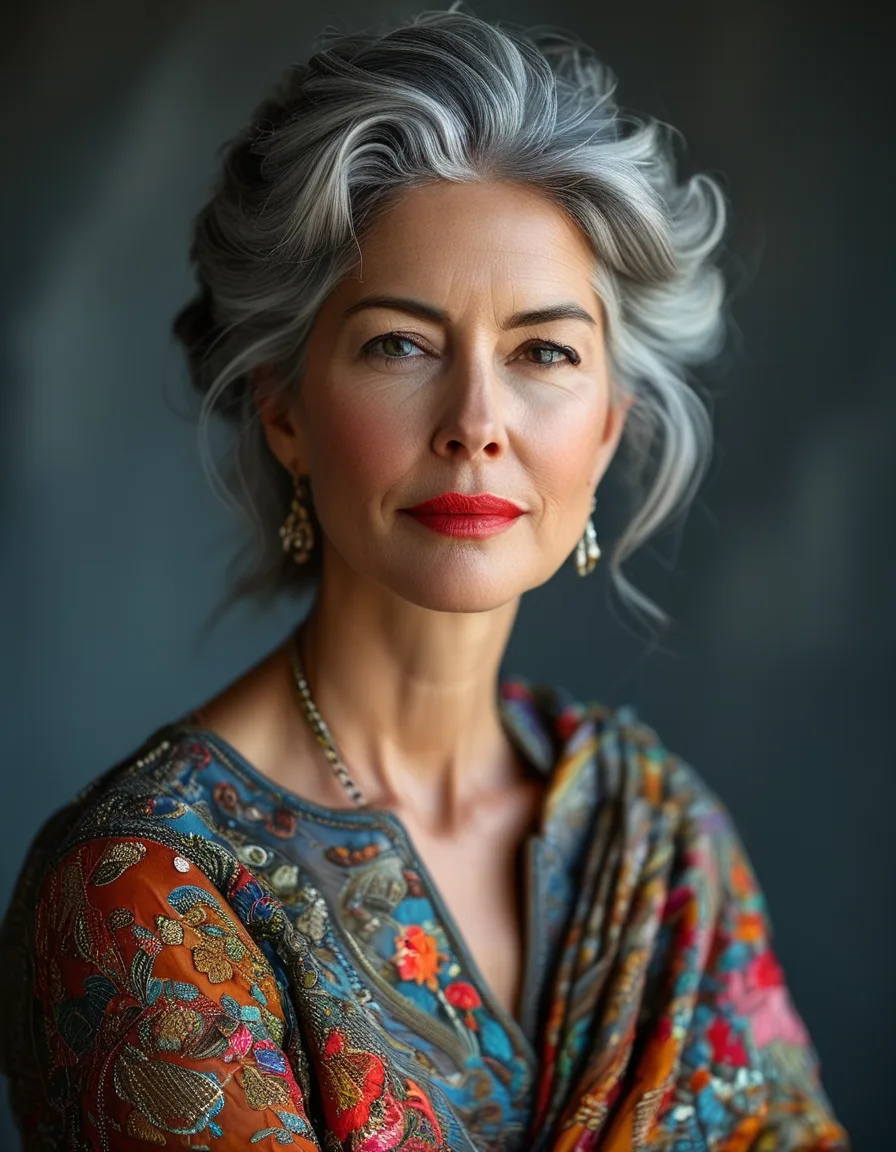
Gray hair gets treated as a style limitation, something to plan around cautiously, when it’s really just a genuine shift in the undertone and contrast level of an outfit’s frame, which changes which colors actually flatter, nothing more mysterious than that.
Why Gray Hair Is a Contrast Shift, Not a Limitation
The mechanism: gray hair typically lowering the natural contrast between hair and skin compared to darker hair, which shifts which color intensities read as flattering versus washed out against that new, softer frame.
Why Some Colors Suddenly Read as Better
The color shift: cooler, clearer tones and jewel tones often reading more vividly and flatteringly against gray hair specifically, since gray’s cool undertone tends to harmonize with and amplify similar cool tones nearby.

Why Certain Old Favorites Might Stop Working
The other side: colors that relied on contrast against darker hair, certain warm, muted tones especially, sometimes reading as duller or flatter against gray’s lower natural contrast, which is a genuine shift, not a rule about age.
Testing the New Palette Without Guessing
The practical approach: holding a few genuinely different color swatches near the face in natural light after a gray transition to see which now read as vivid versus flat, rather than relying on old assumptions from a previous hair color, and the frame (gray hair changes which colors flatter because it changes contrast and undertone, not because certain colors become age-inappropriate — testing the new palette directly is more useful than following a generic rule.)
Gray hair gets treated as a style limitation, something to plan around cautiously, when it’s really just a genuine shift in the contrast and undertone of an outfit’s frame, since gray typically lowers the natural contrast between hair and skin compared to darker hair, which shifts which color intensities read as flattering versus washed out. Cooler, clearer tones and jewel tones often read more vividly against gray hair specifically, since gray’s cool undertone tends to harmonize with and amplify similar cool tones nearby, while certain warm, muted tones that relied on contrast against darker hair can read as duller against gray’s lower natural contrast, a genuine shift rather than a rule about age. Holding a few genuinely different color swatches near the face in natural light after a gray transition, to see directly which now read as vivid versus flat, is more useful than relying on old assumptions carried over from a previous hair color.
Keep Reading
This article is for general styling and informational purposes only. Trends, sizing, availability and pricing may vary by brand and season.