Dressing With Gray Hair: The Wardrobe Recalibration Nobody Tells You About
Quick Answer: Gray hair changes the contrast and undertone of your whole coloring, so the colors that flattered you before may now wash you out. The best colors to wear with gray hair are jewel tones (sapphire, emerald, true red), crisp white, charcoal, and cool pinks. The usual casualties are yellowed beiges, camels, and muddy olives. Audit only the pieces that sit near your face — bottoms rarely matter.
Nobody warns you about this part. You spend a year growing out the color, you finally love the silver, and then you put on the blouse you’ve worn to every good dinner for six years and something is off.
The blouse didn’t change. Your coloring did.
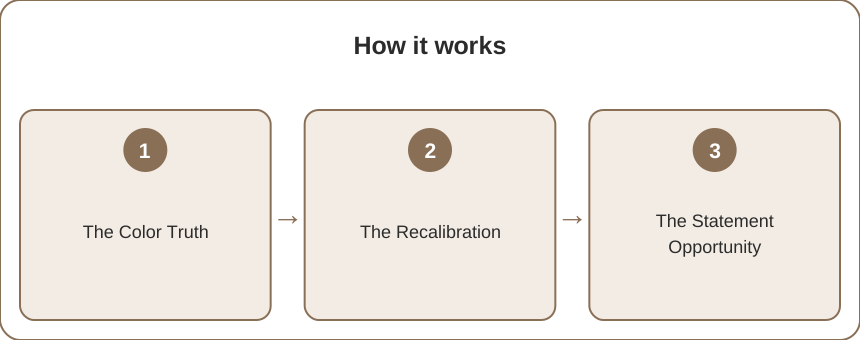
Going gray shifts your contrast, your undertones, and the whole conversation between your hair and your skin. The wardrobe that served your former hair usually needs a quiet recalibration — not a purge, just a retune. Here’s the color truth, the practical audit, and the part most people miss: silver isn’t something to dress around. It’s the boldest neutral you’ll ever own.

What Colors Look Best With Gray Hair?
Start with the winners, because there’s a clear pattern: gray hair loves saturation and clarity.
Jewel tones sing. Sapphire, emerald, true red, deep teal, and amethyst all read vivid against silver instead of competing with it. Where those colors might have looked heavy against brown or blonde hair, they now look deliberate.
Crisp white and charcoal-black bring authority. True white — not ivory, not cream — sharpens silver beautifully. Charcoal does the same job with less contrast if stark feels like too much.
Cool pinks and lavenders suddenly work. These are the surprise entries. Dusty rose, soft mauve, and pale lilac tend to fight warm hair and harmonize with cool silver.
The through-line is that gray hair has a cool cast, and colors with clarity and cool undertones look intentional beside it. Muddy, warm, low-saturation colors look accidental.
Why Does Gray Hair Change Which Colors Suit You?
Two things shift at once.
Contrast. If you had dark hair, going gray softens the contrast between your hair and skin — high-contrast outfits that used to look balanced can start to look severe. If you were fair-haired, silver often sharpens your contrast, and colors you found too bold before may now be exactly right.
Undertone. Gray reads cool, and it sits directly next to your face all day. That cool cast flatters some former favorites and quietly fights others. Yellowed beiges, mustard-adjacent camels, and olive greens are the most common casualties — they can pull sallow tones forward in your skin.
There’s no rule that overrides the mirror here. A personal audit in real daylight beats any color-season chart you’ll find online.

The Daylight Scarf Test
This is the single most useful five minutes you can spend, and it costs nothing.
Stand by a window in indirect daylight — not bathroom light, which lies. Hold a garment or a scarf up under your chin, look at your face, not the fabric, and ask one question: does my skin look brighter or duller?
You’re watching for three tells. Shadows under your eyes deepening means the color is draining you. Any yellow or gray cast in your skin means the same. Your face looking lit from the front means keep it.
Do this with 15 pieces and you’ll have a clear map of your new palette. Do it with your whole closet in one sitting and you’ll hate the process by garment 20 — split it across a few sessions.
How Do You Recalibrate the Wardrobe Without Replacing It?
Here’s the reassuring part: most of your closet is fine.
Audit near-face pieces first. Tops, knits, scarves, coat collars, and jacket lapels do all the talking. The color sitting closest to your face is the color affecting your skin.
Bottoms survive any hair color. Your trousers, skirts, and jeans are almost entirely unaffected. Don’t spend a single minute auditing them.
Sort into three piles, not two. Keep, adjust, release. “Adjust” is the pile that saves your money — a camel sweater that washes you out solo works perfectly with a white shirt collar showing above it, or a jewel-tone scarf breaking the contact point.
Test with accessories before buying garments. A $20 scarf in sapphire tells you whether the color works before you commit to a $180 blazer in it.
Metals shift too. Silver jewelry now reads as harmony; gold reads as deliberate warm contrast. Both work — they just do different jobs than they did before.
Myth vs Fact
Myth: You should avoid black once your hair goes gray. Fact: It depends entirely on your skin. Against silver, all-black is genuinely striking on some people and harsh on others. If it reads severe on you, charcoal and ink navy give you the same authority with a softer landing. Test it, don’t assume it.
Myth: Gray hair means you need to dress softer and more muted. Fact: The opposite, usually. Muted plus silver is where the washed-out worry actually comes from. Silver hair paired with strong color and sharp lines is the combination that reads striking.
Myth: You need a whole new wardrobe. Fact: You need to re-examine roughly the top third of it. Everything below the waist is untouched.
Myth: Camel is off-limits forever. Fact: Yellowed, warm camels are the problem. Cooler, greyed camels and true taupes often still work — and even a warm one is rescued by a white or charcoal layer at the collar.
Silver as a Style Statement
Now the reframe that changes everything.
Stop treating gray as a background condition and start treating it as an accessory you happen to be wearing every day. It’s the boldest neutral you own — build the outfit around it the way you’d build around a statement coat.
Look at the silver-haired style icons people actually name, and they share one trait: contrast and intention. Crisp tailoring. Bold eyeglass frames. Strong color at the face. A decisive lip. None of them are hiding.
The gray also harmonizes naturally with the quiet-luxury palette — ivory, charcoal, navy, camel done right — which is why elevated-neutral dressing tends to look effortless on silver hair. And if you’re still in the growing-out phase, that’s its own style chapter, not a waiting room: deliberate headbands, good updos, and strong near-face color make the transition months look chosen.
Mini FAQ
What colors should you avoid with gray hair?
The usual offenders are yellowed beiges, warm mustard-camels, muddy olives, and low-saturation warm browns — especially in tops and scarves. They tend to pull sallowness into the skin. Test each one with the daylight scarf test before releasing it, though; the “adjust” pile rescues more than you’d expect.
Does gray hair make you look older?
Not on its own — what ages a look is the combination of silver hair with washed-out colors and vague, unstructured clothing. Silver hair with defined tailoring, a clear color at the face, and intentional accessories reads sharp and current at any age.
Should I wear silver or gold jewelry with gray hair?
Both work, differently. Silver creates tonal harmony and looks quietly polished. Gold provides deliberate warm contrast and reads more like a statement. If you’re building a small everyday set, silver is the safer default; keep one strong gold piece for when you want contrast.
TL;DR:
- Gray hair shifts your contrast and undertone — the near-face third of your wardrobe is what needs auditing.
- Jewel tones, crisp white, charcoal, and cool pinks sing; yellowed beiges and muddy olives usually sag.
- Use the daylight scarf test: watch your face, not the fabric.
- Bottoms are unaffected. Don’t waste time on them.
- Reframe silver as your boldest neutral, then dress it with intention — strong color, sharp frames, a decisive lip.
Jewel tones near the face, audit in daylight, wear the silver like a statement. The gray isn’t fading — it’s a palette upgrade, and the recalibration takes an afternoon.
Keep Reading
This article is for general styling and informational purposes only. Trends, sizing, availability and pricing may vary by brand and season.